gaggiclanker
A self-hosted archive for a GaggiMate espresso machine. It keeps every shot the machine would delete, groups them into versioned Recipes, and talks them through with the language model you choose.
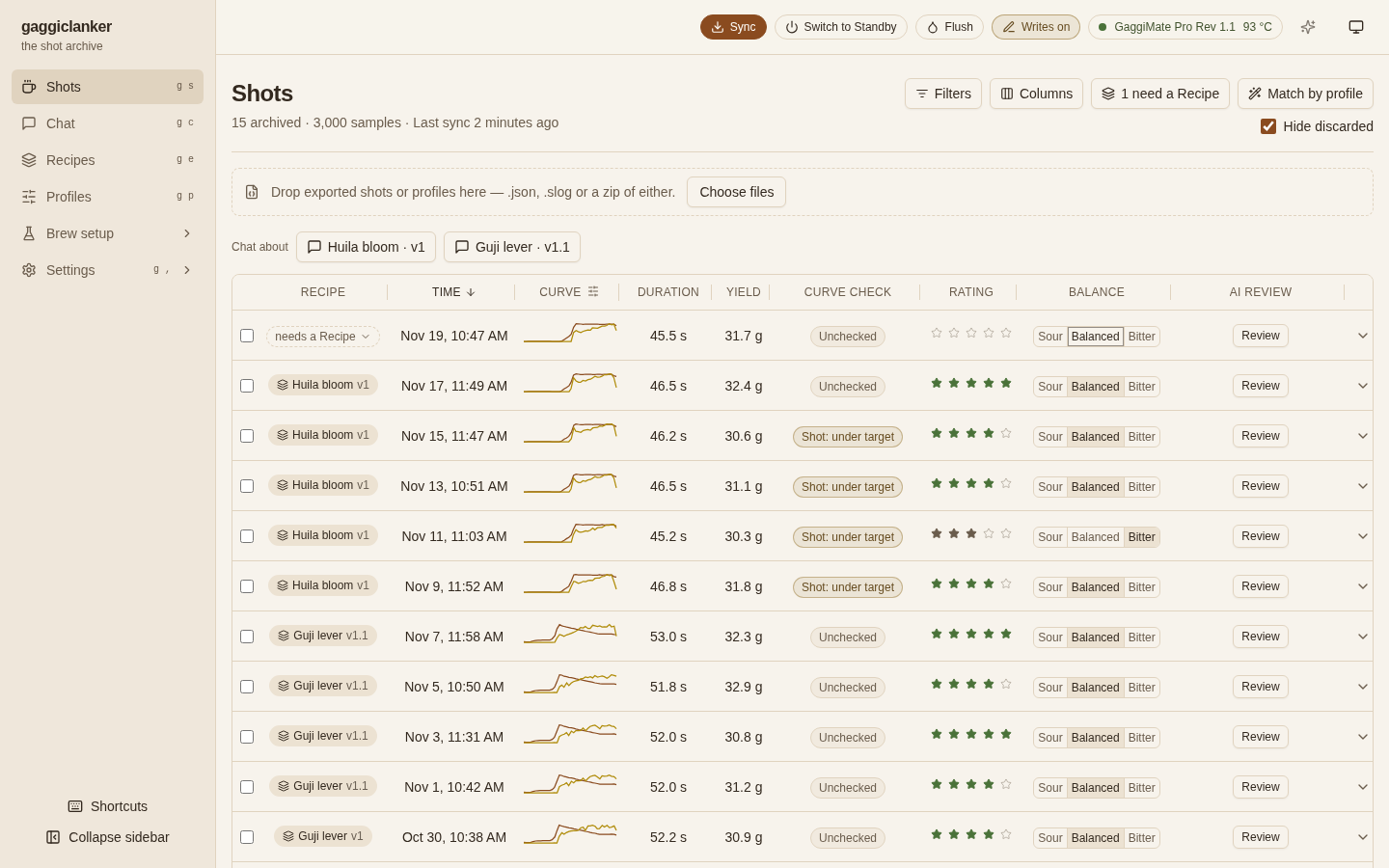
What it does
- Archive. One press of Sync brings in every shot the machine holds (raw
.slogbytes, every sample, phases, notes) and its profiles, into one SQLite file. Exported files can be dropped in too. - Judge. Curves and deterministic checks for every shot; rate, balance or discard it straight from the list.
- Recipes. Bean, grinder, profile, grind, dose and yield, versioned. Each version records what changed, what you predicted, and whether it held.
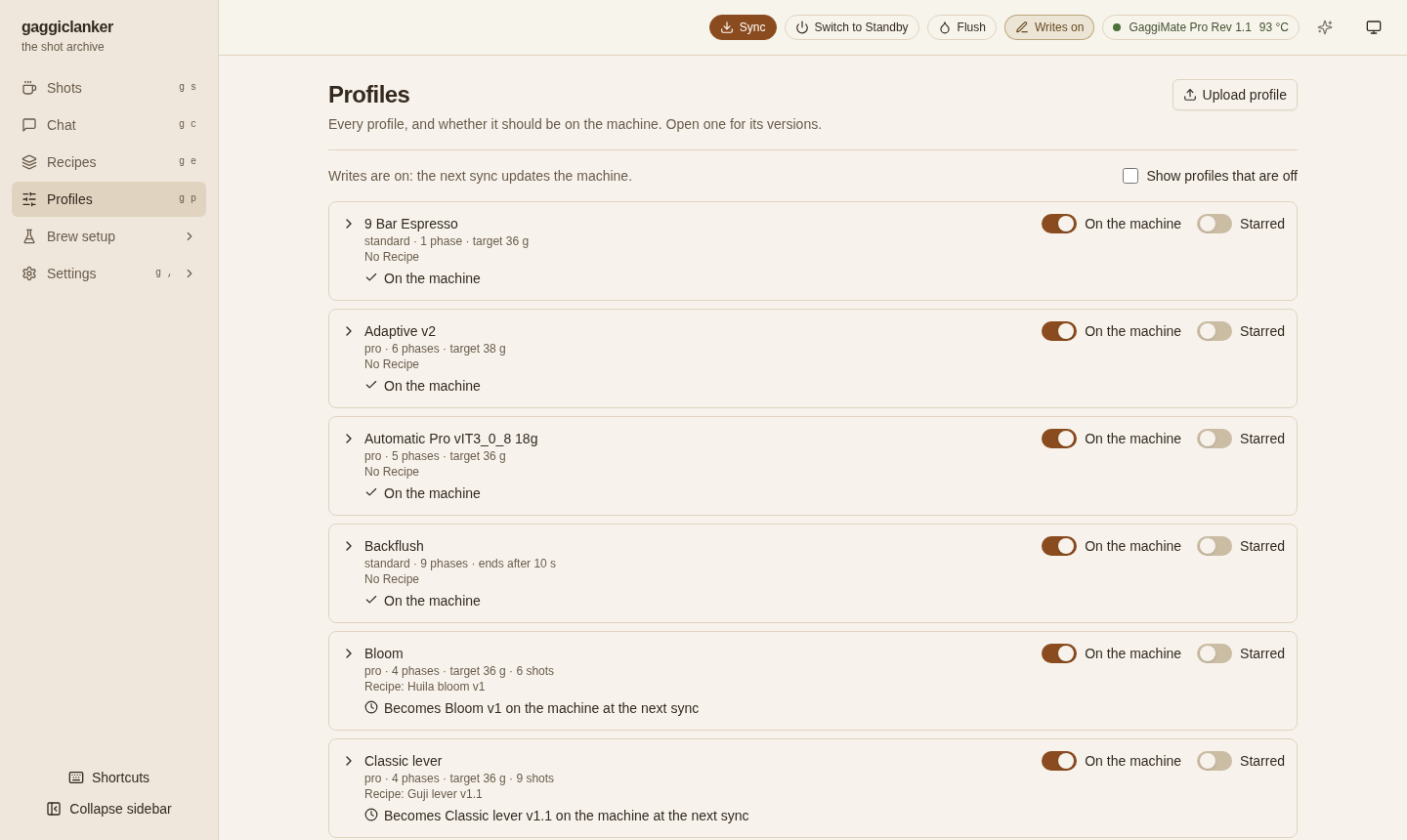
- Profiles. One list of every profile you have had. Switch one on or off the machine; writes are off by default and guarded by four safety layers.
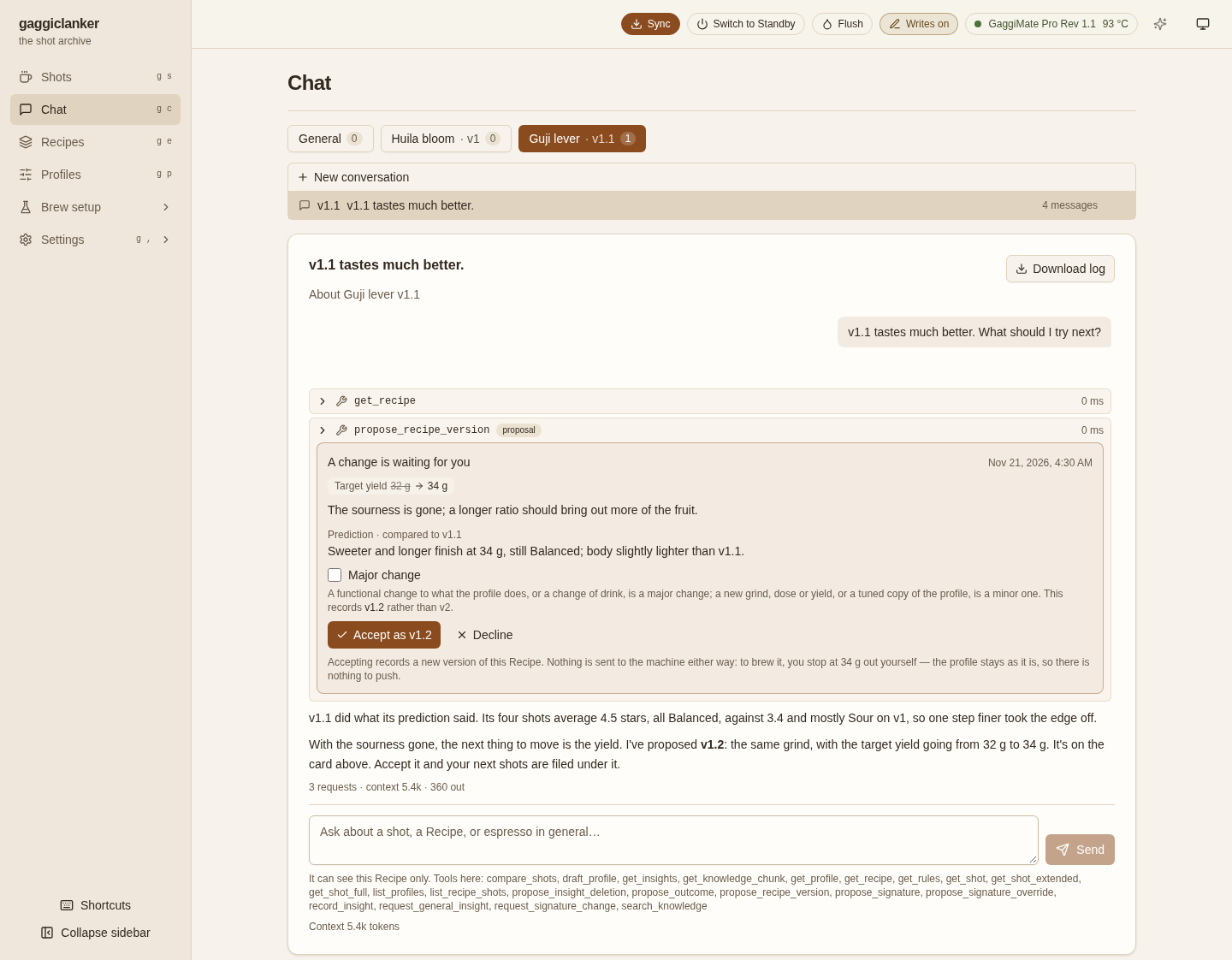
- Ask. A model reviews a shot when you ask, and a chat per Recipe proposes the next change for you to accept or decline. Claude Code, Anthropic, OpenAI, OpenRouter, Ollama, LM Studio or any OpenAI-compatible gateway.
- Local. One container, one SQLite file, optional sign-in, no telemetry. Works with GaggiMate firmware 1.10.
How it works
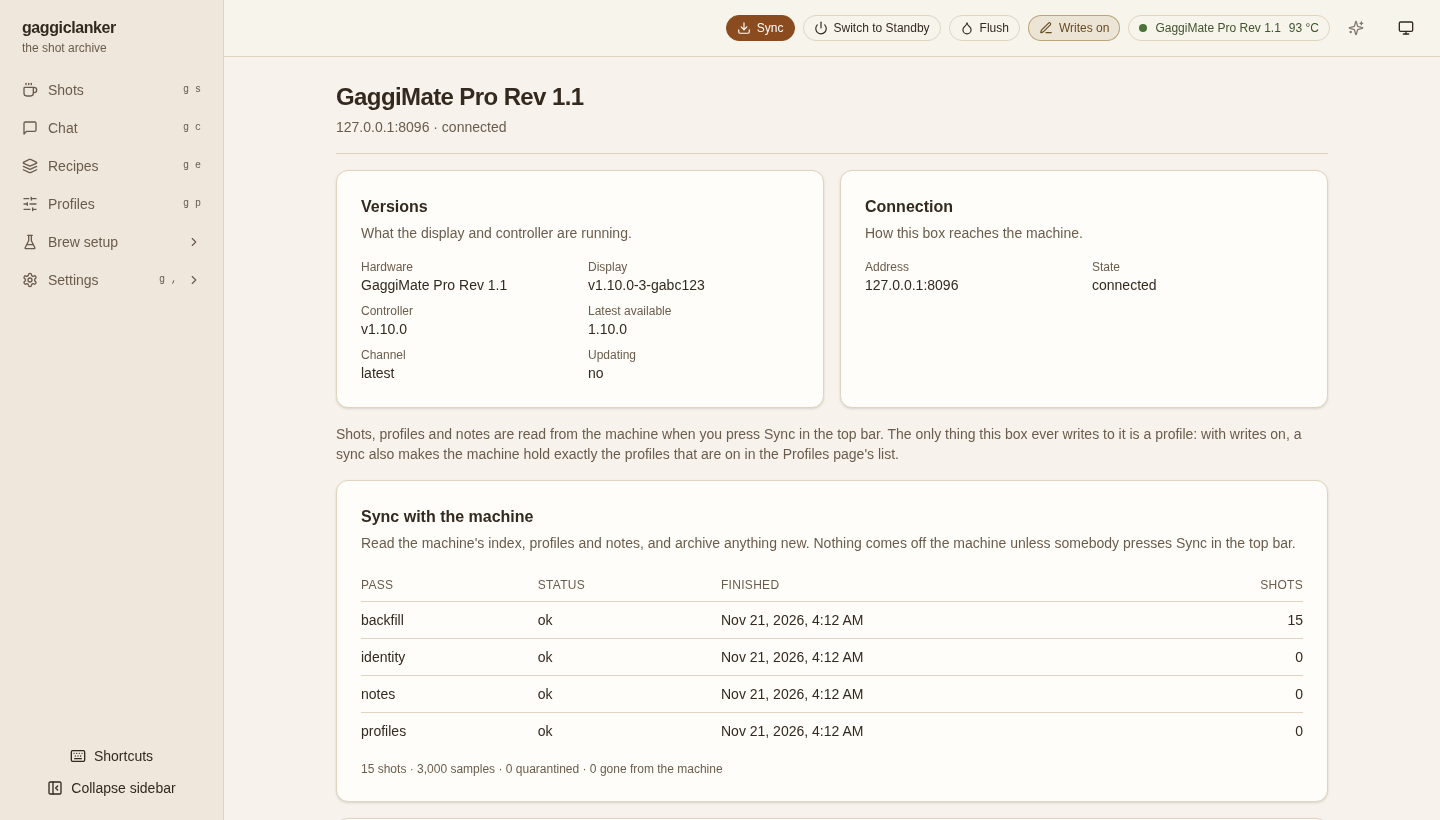
1. Enter the machine’s address under Settings → Machine access and press Sync. The first sync reads its whole history; after that, sync whenever you have pulled some coffee. See Getting started.
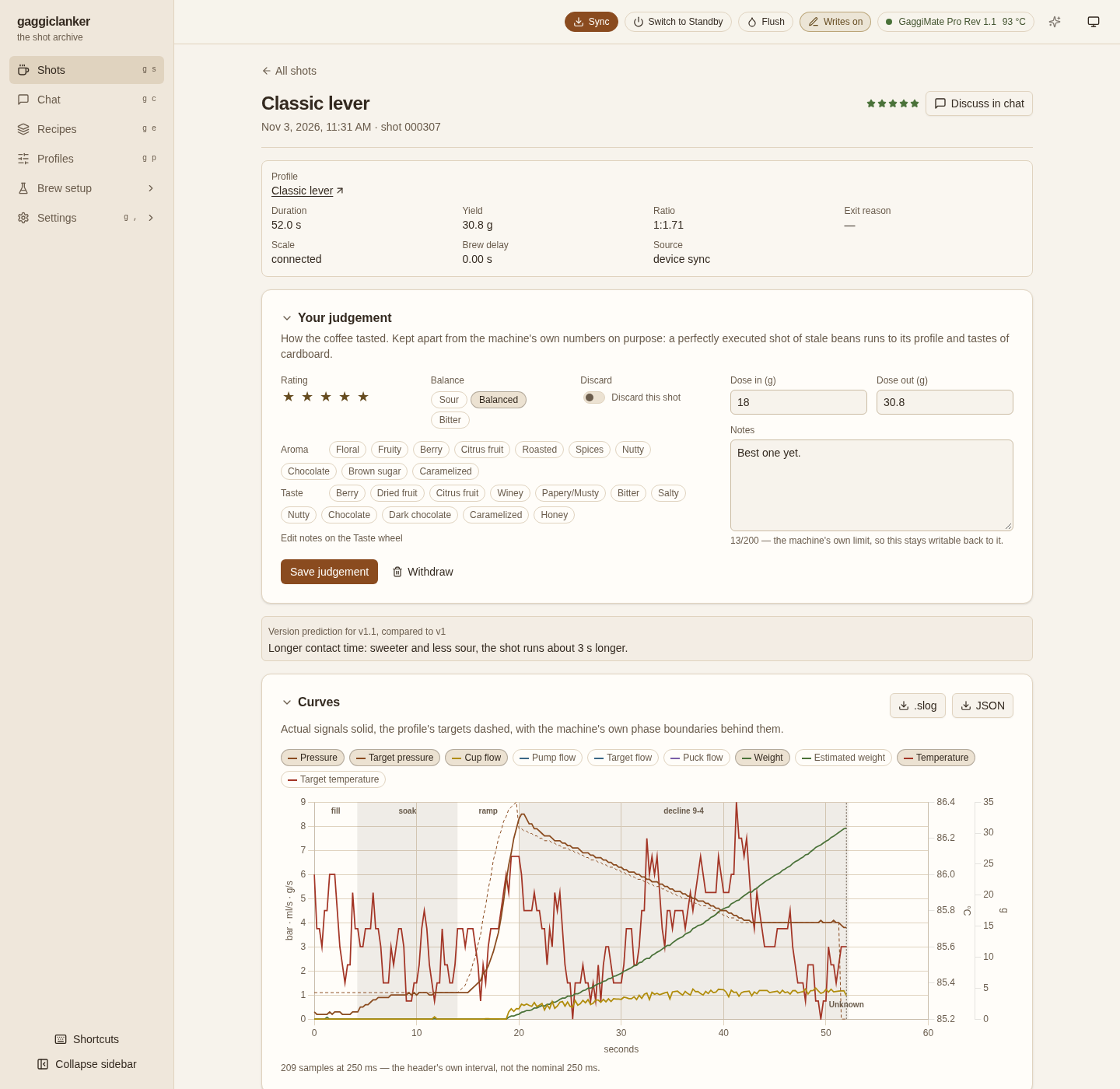
2. Judge each shot: stars, balance, taste notes, and its curves against the profile’s targets. See Shots and Recipes.
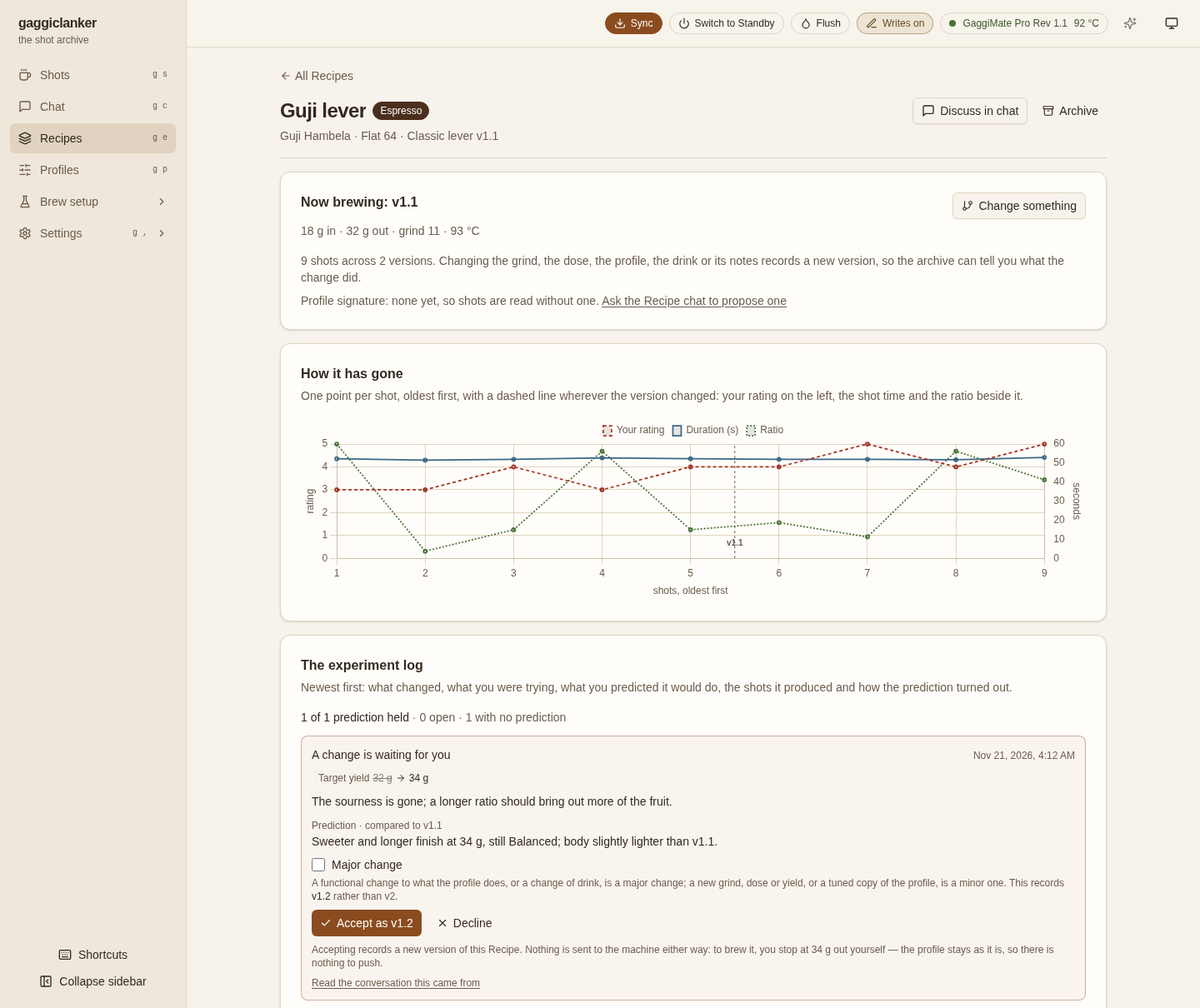
3. Dial in a Recipe. Every change is a new version that can carry a prediction, and the experiment log says whether it held. See The experiment log.
4. Keep the machine’s profiles in one list: switch one on or off, choose its active version, and the next sync makes the machine match. See Profiles and the machine.
5. Ask about a Recipe. The chat reads its shots and proposes one change at a time; nothing in the Recipe changes until you accept it. See Review and chat.
The docs
- User guide: install it, sync your shots, dial in a bean, fix problems. Start with Getting started.
- Architecture: how it works inside and why it was built that way.